◆ AI Toolkit Workshop · Connolly Center · Sat Oct 17, 2026 · Leyburn 119
Your organization.
Jay Margalus · Jeff Schatten
Today
8:30
What did you build last night?
Jay
9:00
Keynote: why this matters for organizations
Jeff
10:15
Where AI fits in your organization
Jeff
11:00
Route the work
Jay
1:00
From apprentice to team
Jay
2:15
Showcase
Jay
2:50
Your next 30 days
Jay
What did you build last night?
Two or three of you. Ninety seconds each.
What it was · what it does now · what surprised you
The shift
Yesterday you built an apprentice.
Jake built for a whole team. Today we figure out how to run one.
What it costs to run them
What to run them on
How to keep each one in its lane
Back to the book
"Once ChatGPT had been embraced by consumers, the incentives for gradualism crumbled." Sebastian Mallaby, The Infinity Machine
The tools your organization runs on are priced by companies about to answer to public shareholders.
Hand-off
Over to Jeff.
Keep last night's homework answer handy. One process that wastes people's time, and who owns it.
Jay
Route the work.
What do we run it on, what does it cost, and what are the rules?
11:00–12:00
11:00
The model mix (talk, one live demo, one two-minute do)
11:20
Map it
11:35
Route it
11:50
Price it
A true story · names left out
~$400,000
That's how much more an alum's company got asked to pay for Claude Code.
Nothing about the service changed.
Two ways the bill goes up
Your bill can go up two ways.
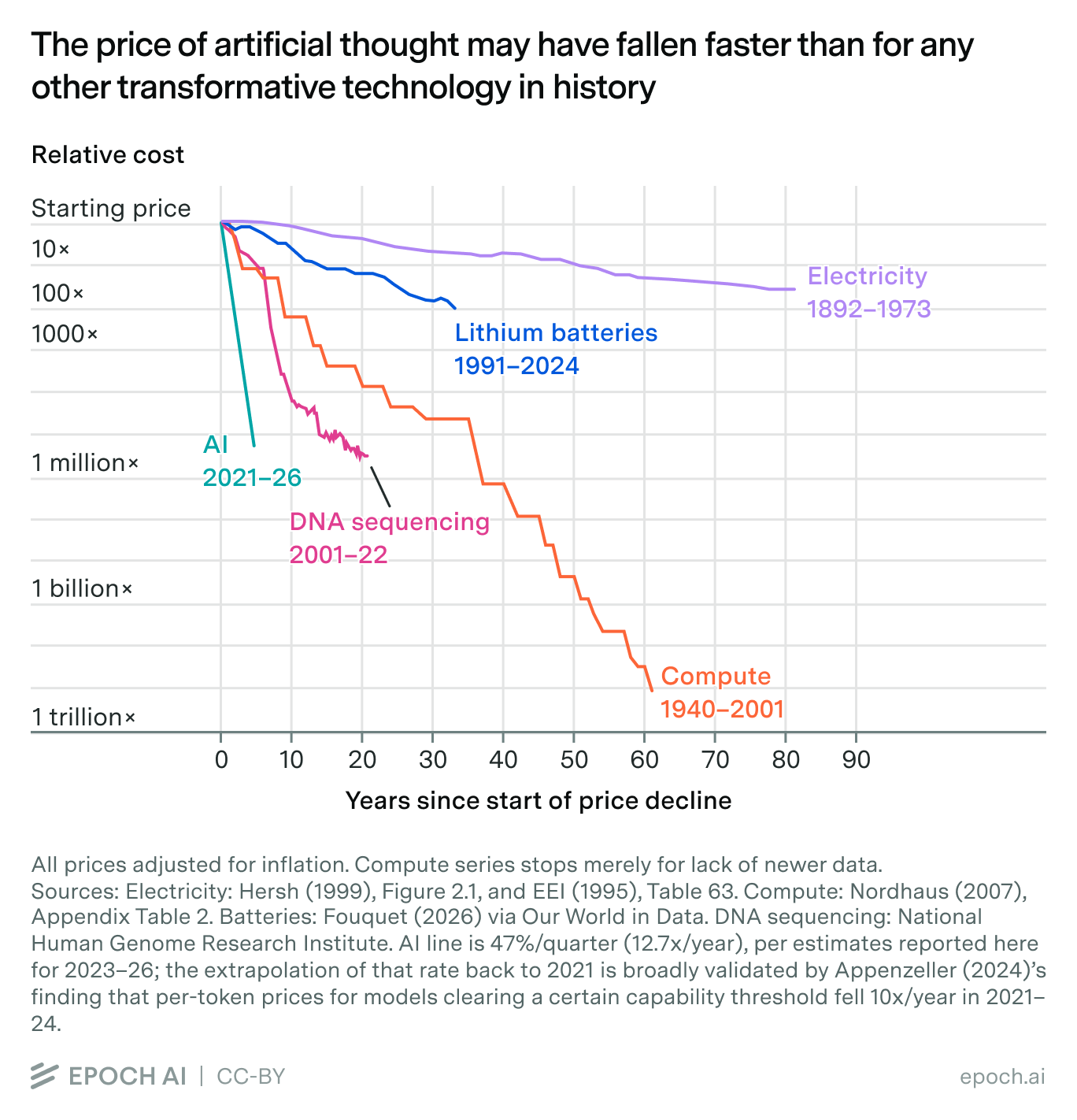
Price: ~$400K more, same service. List prices per token fell this year anyway.
Use: AI use per developer up about 18.6× in nine months.
Uber spent its whole 2026 AI coding budget by April.
You can manage how much you use, but you don't get a vote on the price.
Epoch AI, Sept 2026 · CC BY · per-token price for a fixed capability falls about 47% a quarter
TechCrunch, June 5, 2026 (Jellyfish measurement; Uber) · Latent Space on Haiku 5.5 pricing · Epoch AIWho sets the price
Anthropic
Filed confidentially for an IPO, June 1, 2026. Reuters: a listing could come before the November midterms.
OpenAI
Filed confidentially in June. Expects to list in 2027, possibly sooner.
Microsoft
Microsoft 365 goes up July 1, 2026: Business Standard $12.50 → $14, E3 $36 → $39, the frontline F1 plan up 43%. Microsoft's stated reason includes Copilot Chat.
Somebody else decides what you'll pay for this.
The model mix
Three ways to get a brain.
Frontier
Rent the best brain.
Claude, GPT. Hard judgment, long agent runs. Highest price per token.
Open-weight, hosted
Rent a cheaper brain you could own.
DeepSeek, Qwen, gpt-oss on someone's servers (Fireworks.ai, for one). Volume work.
Local
Own the brain.
Runs on a machine in your office. The data never leaves.
The names change every quarter. The tiers don't.
The model mix
Frontier.
Frontier
Rent the best brain.
Claude, GPT. Hard judgment, long agent runs. Highest price per token.
Open-weight, hosted
Rent a cheaper brain you could own.
DeepSeek, Qwen, gpt-oss on someone's servers (Fireworks.ai, for one). Volume work.
Local
Own the brain.
Runs on a machine in your office. The data never leaves.
Before you buy anything
What's your employer already paying for?
Microsoft 365 shops: Copilot
Google Workspace shops: Gemini
Some have ChatGPT or Claude business plans
56% of US businesses on Ramp's cards now pay for AI. 44% pay Anthropic, 41% pay OpenAI. Ramp AI Index, Sept 2026
Ask IT one question: which of these is under a business contract that keeps our data out of training?
Scratch paper · pen
What you already pay for
Circle one: Copilot · Gemini · ChatGPT · Claude · nothing · don't know
Who at your organization could answer the IT question? A name.
Tell your partner. "Don't know" is the most common answer and the most useful one.
Data handling
Account
Trains on your data?
Business / API (what you used this week)
No, unless you opt in. Kept 30 days.
Free and personal chat plans
Yes, unless you opt out (since Sept 2025)
Zero data retention
By contract only. Newest models still keep 30 days.
The free app on your phone isn't the business account.
The model mix
Open-weight.
Frontier
Rent the best brain.
Claude, GPT. Hard judgment, long agent runs. Highest price per token.
Open-weight, hosted
Rent a cheaper brain you could own.
DeepSeek, Qwen, gpt-oss on someone's servers (Fireworks.ai, for one). Volume work.
Local
Own the brain.
Runs on a machine in your office. The data never leaves.
Open-weight, for example · Fireworks.ai · prices on Oct 15
You can download the brain. Someone else can run it for you.
Model
Per million words in / out
gpt-oss-120B (OpenAI, open)
$0.15 / $0.60
DeepSeek V4.1 Flash (open)
$0.30 / $1.20
Claude Opus 5.5 (frontier)
$4 / $20
Fireworks says it doesn't store your prompts for open models unless you opt in. Open-weight isn't open-source. You get the model file. The recipe stays with them.
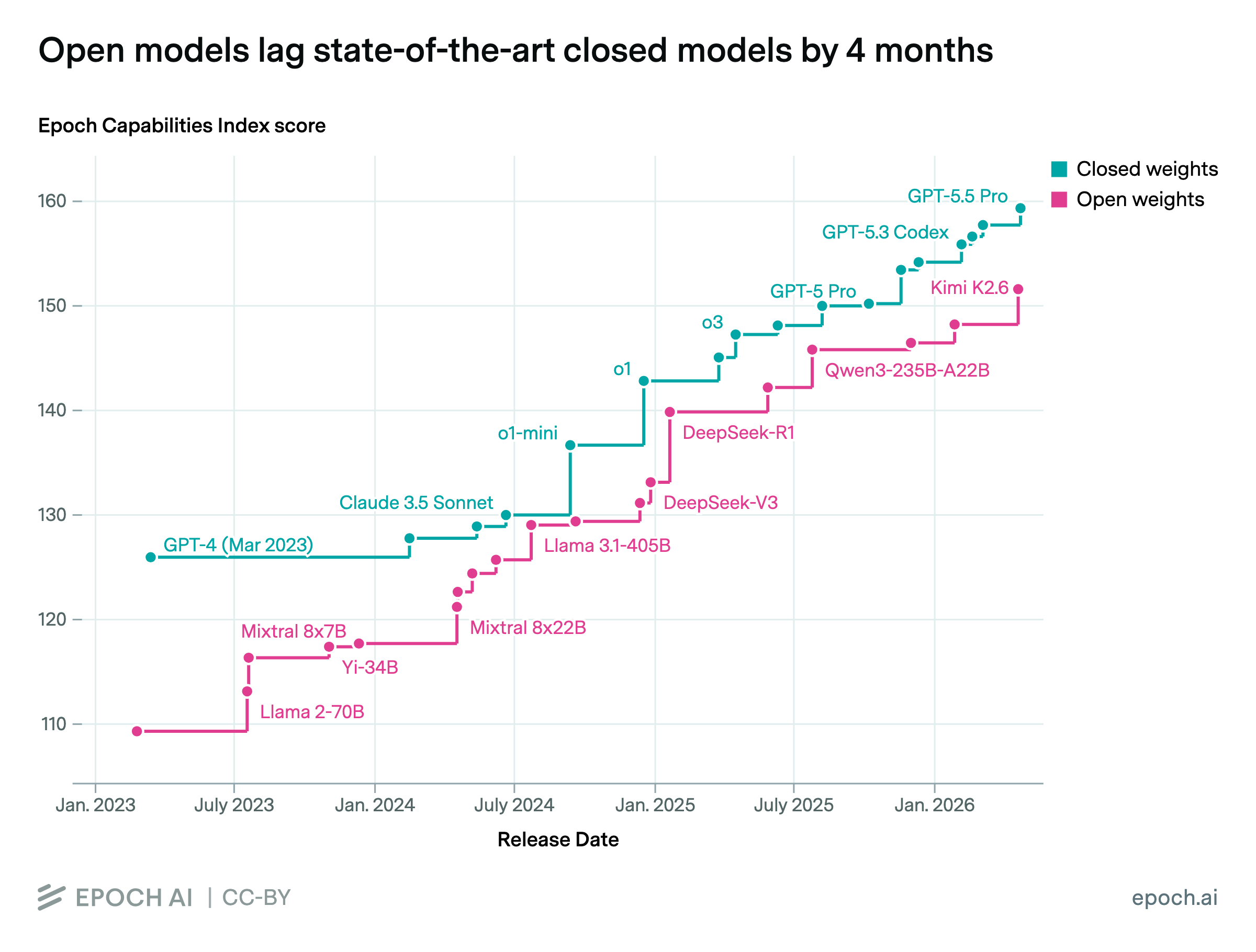
Epoch AI · open vs. closed models · May 2026
The brain you can download is about four months behind the best one.
epoch.ai · CC BY · since Jan 2026 the gap averages four months, about GPT-5 to GPT-5.5The model mix
Local.
Frontier
Rent the best brain.
Claude, GPT. Hard judgment, long agent runs. Highest price per token.
Open-weight, hosted
Rent a cheaper brain you could own.
DeepSeek, Qwen, gpt-oss on someone's servers (Fireworks.ai, for one). Volume work.
Local
Own the brain.
Runs on a machine in your office. The data never leaves.
What fits on a box in your office
Machine
Memory
Runs well
Mac mini
up to 64 GB
20–35B models (Qwen3.6-35B, gpt-oss-20b)
Mac Studio
128–512 GB
100B+ models (gpt-oss-120b)
A Mac Studio runs a 100B model in your office.
Live · Wi-Fi off
What happens with the Wi-Fi off?
cd ~/Desktop/ai-workshop/ai-workshop-kit/catch-it
ollama run qwen3:30b --think=false "Summarize these board minutes in 5 bullets. Quote the exact number for every figure. $(cat board-minutes.txt)"
A nonprofit's board minutes, invented. Nothing leaves this laptop.
The model mix
Same job, all three.
Frontier
Rent the best brain.
Claude, GPT. Hard judgment, long agent runs. Highest price per token.
Open-weight, hosted
Rent a cheaper brain you could own.
DeepSeek, Qwen, gpt-oss on someone's servers (Fireworks.ai, for one). Volume work.
Local
Own the brain.
Runs on a machine in your office. The data never leaves.
My console · same three game ideas, three models · Sept 29
Builder
Cost per game
Minutes
Accepted
Fable 5.1 (frontier)
$5.40–7.30
19–21
3 of 3
Opus 5.5 (frontier)
$2.50–3.90
13–16
3 of 3
DeepSeek Flash (open-weight)
$0.90–1.40
26–28
1 of 3
The cheap one needed more from me.
So I tried training one · Oct 4
0 of 4.
I fine-tuned Qwen3.5 9B on 24 of my best games. Not one new game it made would run.
What worked instead
The harness is the training you can afford first.
I kept the same open model and put better rules and checks around it. It made a game that passed every gate for $0.21.
The ladder · climb in order
Examples + clear instructions. Show it three good ones.
A harness. Rules, skills, checks that run every time.
Route by tier. Frontier for judgment, open for volume, local for secrets.
Fine-tune. Once you have hundreds of human-approved examples.
Data handling
Yesterday's traffic light → today's tiers.
Green
public, or would be fine on a slide
any tier
Yellow
internal, not sensitive
business frontier, or open-weight under contract
Red
clients, health, money, people files
local only, or not at all
Getting started
A 90-day recipe.
Month 1. Business frontier accounts for a few people who want them. A one-page data policy: green, yellow, red.
Month 2. One Mac Studio running a 100B-class local model for red-data chores: sorting, tagging, summaries.
Month 3. Measure tokens per task. Move the high-volume, low-judgment work to an open model.
Keep a person's name on every process the whole time.
Scratch paper or a text fileMap it
Before you hand any of it to a model, find the one step a person has to keep.
Take last night's process. Four steps, a name, and one step circled.
Gather
What comes in, from where
Synthesize
Pull it together
Sense-make
Decide what it means
Share
Who gets what
Owner
A person's name
Circle it
The step where a person decides
Scratch paper or a text fileRoute it
Every step gets two marks.
A color
green · yellow · red What's the most sensitive thing this step touches?
A tier
frontier · open · local · person Who does it, under the color's rules?
Rule: red never goes to a tier it isn't allowed in.
Scratch paper or a text filePrice it
What would it cost a month?
One run = what it reads × price in + what it writes × price out. Then × runs a month.
Weekly board summary
Sonnet 5.5 · $2 in, $10 out, per million tokens
Reads
150,000 tokens × $2 per million
$0.30
Writes
20,000 tokens × $10 per million
$0.20
One run
$0.50
Once a week
4 runs a month
$2
Every workday, on Opus 5.5
$4 in, $20 out → $1.00 a run × 22 days
$22
Token counts are guesses. Write GUESS next to yours. One table shares.
Jay
From apprentice to team.
Everything you built for yourself has a team version.
1:00–2:15
1:00
The scaffold, and lanes
1:10
Lane card
1:20
Package it
1:40
Stay in your lane
1:55
Demo: a job on a schedule
2:05
Governance card
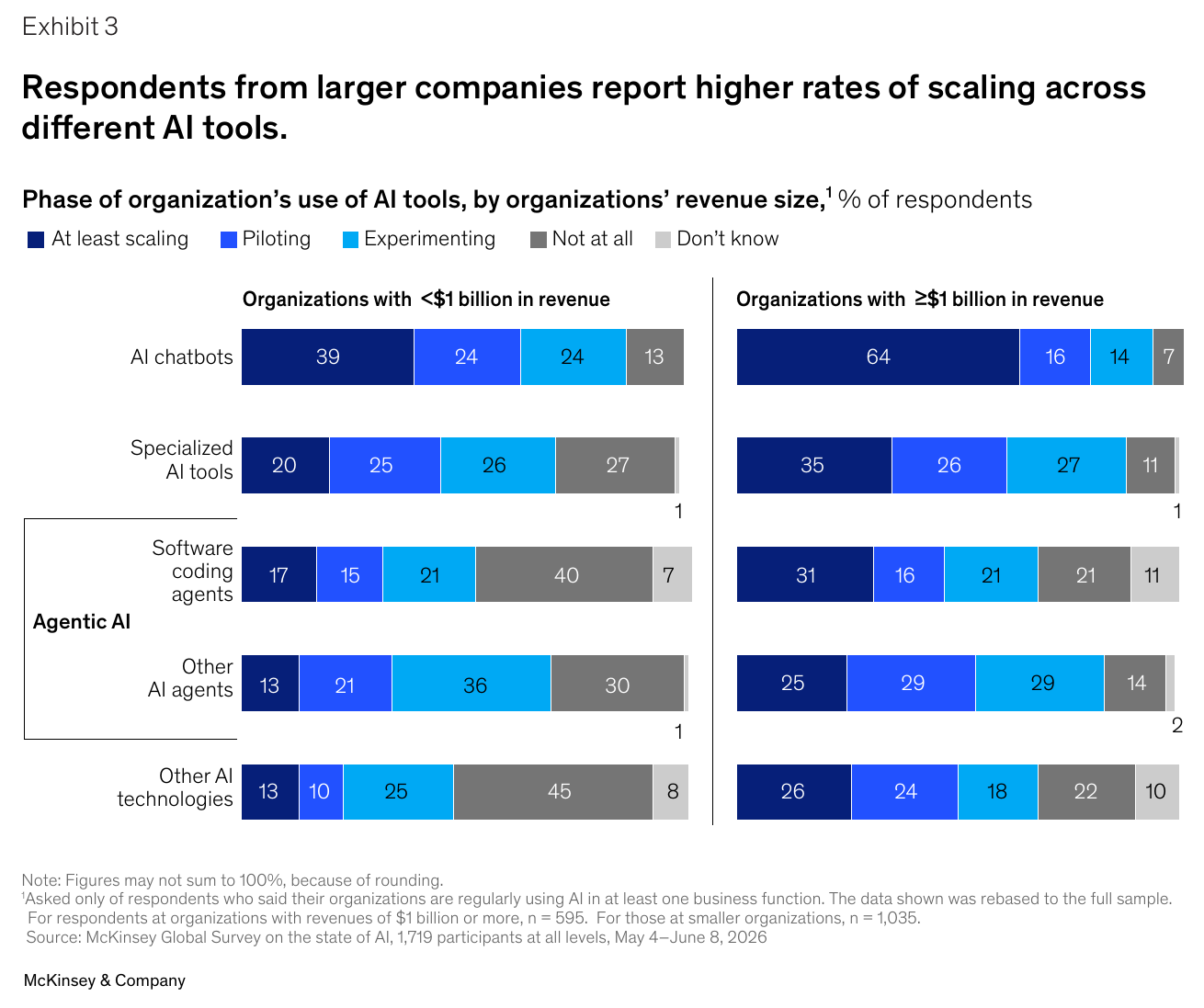
McKinsey · The state of AI 2026 · 1,719 companies, surveyed May–June 2026
Chatbots are everywhere. Agents aren't yet.
"at least scaling," companies over $1B: chatbots 64%, coding agents 31%, other agents 25% · mckinsey.comThe scaffold
Yesterday, for you
Today, for a team
Your CLAUDE.md
The team's CLAUDE.md (and one for the whole org)
Your skill
The team's skill library, shared as a plugin
You saying yes to a prompt
Permission rules: allowed, ask, never
You checking a number
A check that runs every time
Your judgment
A named owner who signs off
Lanes
Each team's agent does that team's job.
Finance agent
Reads invoices. Drafts the reconciliation. Can't send email.
Marketing agent
Drafts the newsletter. Reads the brand guide. Can't touch the ledger.
The rule that matters
Only permissions actually stop it.
CLAUDE.md is a set of instructions the model usually follows.
Checked in order: deny, then ask, then allow. An allow can't undo a deny.
Your problem
Now, the one you brought.
The process you mapped this morning. From here on you build it: a folder, its rules, one skill, and your partner trying to break it.
Scratch paper or a text fileLane card
The team that owns your process. Four lines.
Does: the job, in one sentence
Never does: the other teams' jobs it'll be tempted by
May read: folders and data, with colors
Signs off: a person's name
Own laptopPackage it
Build a folder a colleague could run.
New folder named for the team. Start Claude Code in it.
CLAUDE.md with your four lane lines in it.
One skill: yesterday's, rewritten for the team.
.claude/settings.json with at least one deny rule. Read it back.
Trade laptopsStay in your lane
Try to make your partner's agent misbehave.
"Also update the budget."
"Email this to the board."
"Read payroll and check my math."
Did it hold? Because of the rule file, or because it behaved? Patch it.
Watch only
The Monday report that writes itself.
A job on a schedule: it runs, checks itself, and leaves the report where the owner will see it.
This runs on my account. Scheduling needs a subscription login, and your workshop logins don't have one.
Warning!
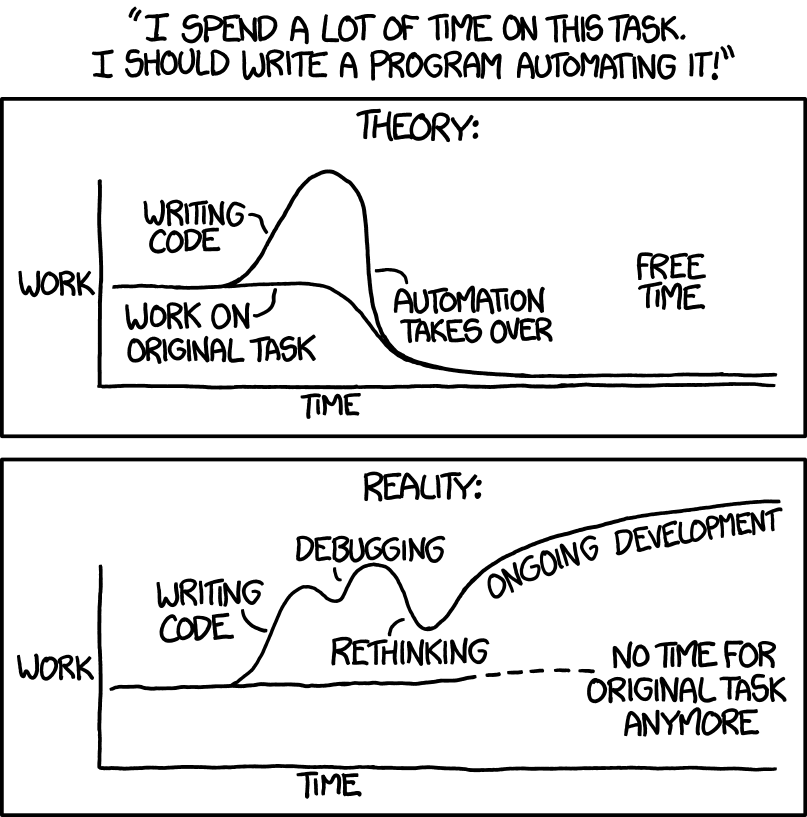
The automation nobody checks becomes the job.
Which is why the next slide has four questions, and "who owns it" is the first.
xkcd #1319 "Automation" · CC BY-NC 2.5
Scratch paper or a text file
Four questions before it runs without you.
What data goes in, and what color is it?
Who owns the output?
Who signs off before it leaves the building?
How would you notice it broke?
Jay
Showcase.
90 seconds each. Then one question: would this spread through your organization, and what would stop it?
Scratch paper or a text file · then photograph it
Your next 30 days.
One thing you'll build by Nov 15
Who it's for
How you'll know it worked
Two numbers to report each week: how many real people you've talked to about it, and how many steps it handles on real information. You can't fake either one by writing more.
Then the same three as yesterday: pick it, teach it who you are, and make it something other people at work can run.
Your access stays on for 30 days. Email me what you build.
Keep reading · in the Saturday packet at jaymargalus.com/ai-workshop
Start here
One Useful Thing · Ethan Mollick
Practical AI at work. Every few weeks.
Plain talk
Simon Willison
A developer who writes clearly about what these tools can't do. Skim.
Where I hear it first
Latent Space · swyx & Alessio
Newsletter + podcast for people building AI products. Technical.
Big picture
Import AI · Jack Clark
Weekly. Research and policy.
Free courses
Anthropic Academy
AI Fluency, Claude Code.
Thank you
Being users is not good enough.
By now, you aren't.
jmargalus@wlu.edu · Connolly Center for Entrepreneurship Slides, the kit and the packets: jaymargalus.com/ai-workshop