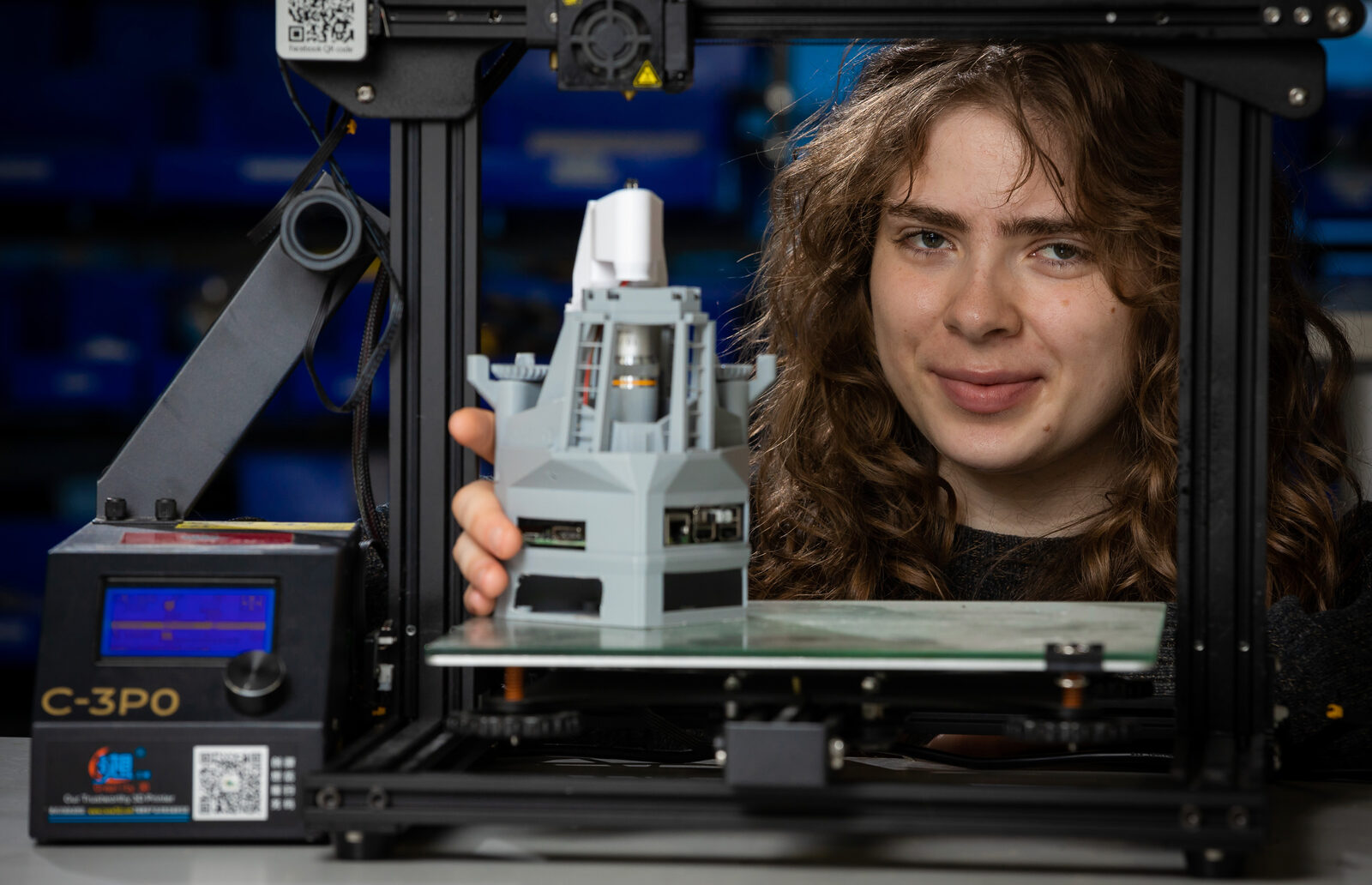
Do hard things.
Jay Margalus · Washington and Lee University · jaymargalus.com/foundations
| 2:45 | Hello. What this is. | 5 min |
| 2:50 | Who's here: the most tedious thing you've ever done | 15 min |
| 3:05 | The course in nine slides | 12 min |
| 3:17 | Watch me build: a live Claude Code demo | 15 min |
| 3:32 | Your keys: install and API access | 10 min |
| 3:42 | The gift-giving exercise | 28 min |
| 4:10 | Before Wednesday | 5 min |
Most courses teach you to use AI.
This one teaches you to build it.
…and point it at work that people are doing badly today.
Who's here
The most tedious thing you've ever done.
Tell your partner about the most tedious thing you've ever done for money.
- A summer job. A chore you got paid for. A club treasurer's spreadsheet. Anything.
- Be specific: what exactly did your hands do, how often, for whom?
- Partner: write it on the index card in one line. Their name, hometown, the thing.
Switch at the timer.
Introduce your partner in one sentence.
"This is Maya, from Richmond. She spent a summer retyping invoices that already existed."
Keep the card. That's your first inefficiency. You'll need three by Wednesday.
The course
Nine slides. The rest is on the site.
What you'll do
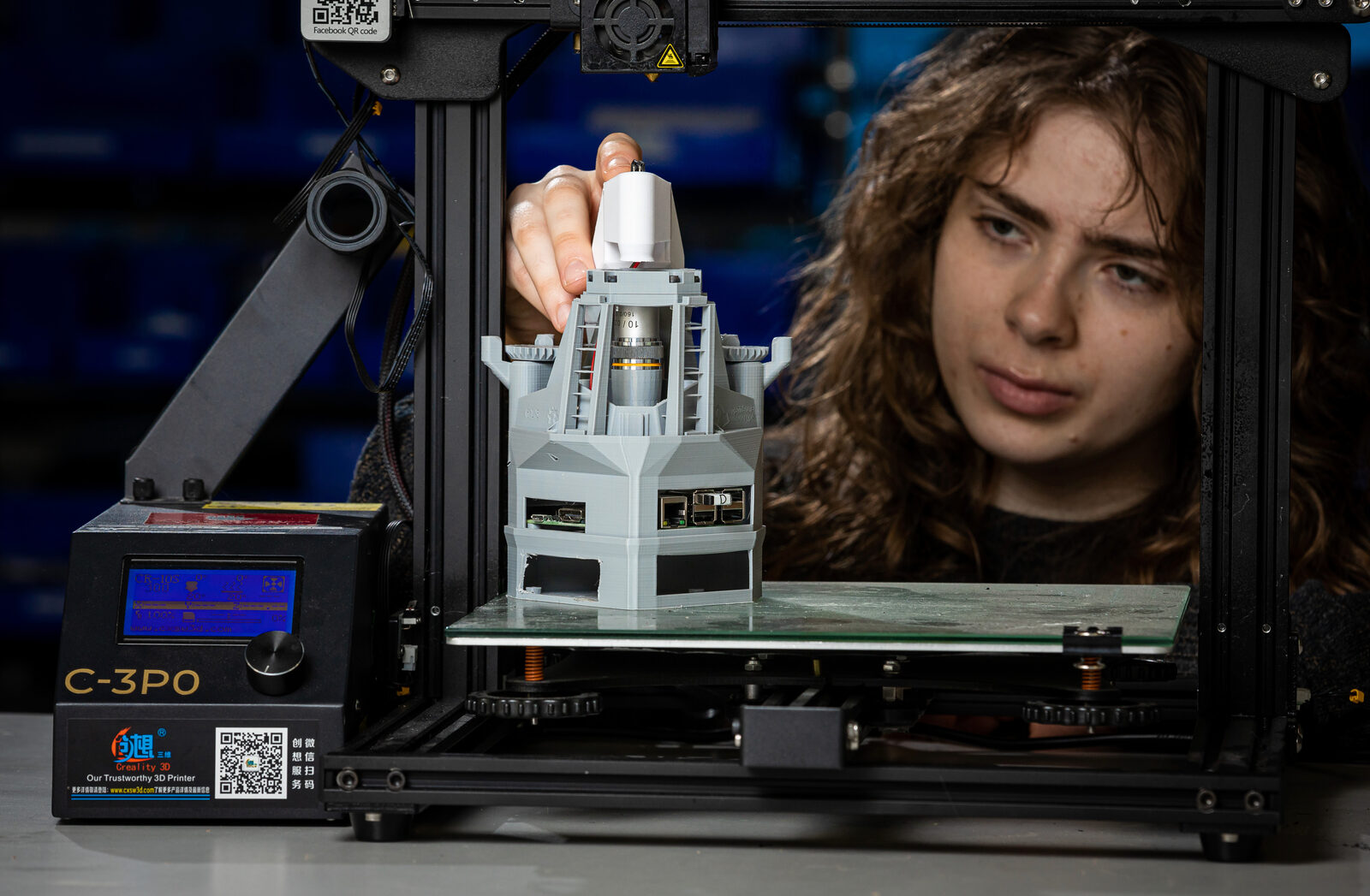
- Build your own AI agent and its harness: skills, hooks, rules, memory, sub-agents.
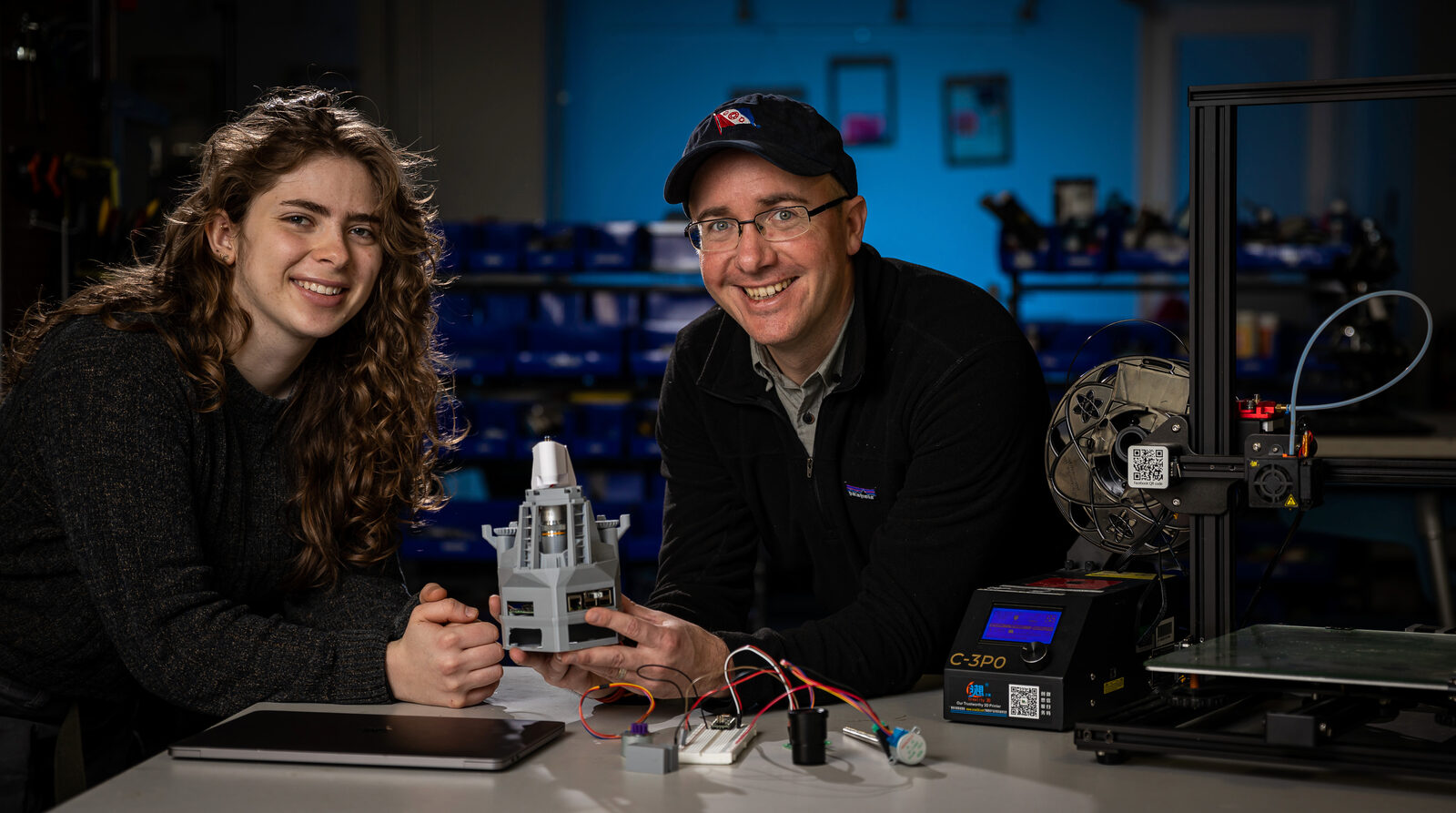
- With a team of two or three, find an inefficiency a real organization does by hand.
- Build the thing that replaces it. Run it there for a week.
- Keep a weekly Venture Log.
- Pitch it on video to alumni judges on November 19.
Knowledge and habits
Knowledge
Agents, harnesses, markets, customers. You'll memorize it. Mostly Mondays.
Habits
Decide with incomplete information. Commit. Change direction when the world says no. Mostly Wednesdays.
Habits are the point. You can only practice them on something real, with people who can tell you no.
The seven skills
Seven teachable skills of entrepreneurial thinking. Your Final Reflection maps your term against them.
- Problem solving. Define, test, learn, iterate. A process, not a one-time fix.
- Tolerance for ambiguity. Deciding with incomplete information.
- Failing forward. Fast experiments; failure is data.
- Empathy. Interviews and observation before solutions.
- Creativity with limited resources. Scrappy prototypes first.
- Responding to critical feedback. Iterate on what peers, advisors, and customers say.
- Teamwork. Roles, accountability, productive disagreement.
The three habits on the last slide are 2, 3, and 6.
The week
| Mon | Build. One harness piece. Demo it to a classmate before you leave. |
| Wed | Venture. One "what is" question, put to work on your project. |
| Fri | Write. Venture Log by 11:59pm. What you tried, learned, decided. |
| Nov 19 | Pitch. Three-minute video, judged live. Required. |
The project: make something AI will replace
- A process done the same way every week by hand
- A decision made by a rule someone could write down
- A discovery task: finding things out
- An outreach task: reaching people
Ten more customers.
Your first organization is a design partner. The business is the other ten who do the same work the same way.
Campus orgs and problems you already know from the inside are out.
How you're graded
No points. Every piece is Satisfactory or Needs Revision against a checklist you can read first. Your letter grade is the bundle you complete.
C
All core deliverables · 9 of 11 logs · up to 3 absencesB
C, plus 10 of 11 logs · 1 book memo · 2 mastery options · up to 2 absencesA
B, plus both memos · 4 mastery options · up to 1 absenceTwo tokens. Late (72 hours), resubmit, or an absence. That's it.
Twelve weeks
| 1–2 | Agent setup, first skill. Teams form Sep 16. |
| 3–4 | Hooks, rules. The hunt. Inefficiency Brief Sep 25. |
| 5–6 | Memory. Prototype 1, baseline, business case. Alumni panel Oct 14. |
| 7–8 | Assemble the harness. Prototype 2. Validation Report Oct 30. |
| 9–10 | Agent org. Storyboard and shoot the pitch video. |
| 11 | Deploy week. Video due Tue Nov 17. Competition Thu Nov 19. |
| 12 | Handoff. Dossier Dec 11. |
jaymargalus.com/foundations · the schedule highlights the current week
Nothing leaves the building without a hand on it.
Until deploy week, your harness drafts. A person clicks send.
Watch me build
A live Claude Code demo. It will probably break once. That's the curriculum.
What Claude Code is
- A program in your terminal that can read files, run commands, and remember.
- You give it a job in plain English. It does the work and shows you what it did.
- The harness is everything you wrap around it: what it may do, when, and how it checks itself.
Model: the engine. Harness: the car. You're building the car.
What you're about to see
- Your twenty index cards, photographed, dropped in a folder. I ask it what's there.
- It reads the cards and sorts them into the four buckets: process, decision, discovery, outreach.
- I add a rule: "argue with me before you agree." I ask which card is the best business. Watch it push back.
- I add a hook: every time it saves a file, it checks for a phone number. It saves the card list. Watch it fire.
What you just saw
| Piece | What it is | You build it |
|---|---|---|
| Skill | A named, reusable behavior | Week 2 |
| Hook | Fires on an event, without being asked | Week 3 |
| Rule | A standing constraint it must obey | Week 4 |
| Memory | What it keeps between sessions | Week 5 |
| Agent org | Sub-agents with jobs, and one that checks the others | Weeks 8–10 |
The harness is the venture. The rules are your judgment, written down.
Your keys
Install it. Sign in. Prove it runs before Wednesday.
Install
macOS · Linux · WSL
curl -fsSL https://claude.ai/install.sh | bashWindows PowerShell
irm https://claude.ai/install.ps1 | iexThen check
claude --version
claude doctor
Needs macOS 13+ or Windows 10+, 4 GB RAM, internet. Windows: install Git for Windows too so it gets a real shell.
Your access
- You'll get an email today inviting you to my organization on the Claude Console. Accept it. That's your account; it's paid for.
- Install Claude Code (previous slide).
- Run
claude. Pick Anthropic Console account, then Sign in with your Console account. A browser opens. Sign in. Come back to the terminal. Done.
No keys to copy, nothing to paste into files. If the browser doesn't open, press c to copy the link. If the browser shows a code instead of sending you back, paste it into the terminal.
Prove it runs
- Make a folder. Put one file in it: anything.
- Run
claudeinside it. Ask: "What's in this folder?" - Ask it to write a file called
hello.mdwith three sentences about you. - Screenshot the result. It goes in your first Venture Log.
If it won't install or won't run: Wednesday 1:45pm, Holekamp 109, bring the exact error text. We'll also make time in class. Nobody falls behind for a setup problem.
The gift-giving exercise
You're not designing a gift. You're designing a moment of meaning.
Round 1: A interviews B. Round 2: switch.
Start with: "Tell me about the last time you gave someone a gift."
- Who was it for? Why did it matter? How did you come up with it?
- What was hard about finding it, or giving it?
- Ask "why?" at least twice. Write down what surprises you.
Five minutes each. Timer runs one round; reset for the second.
Interview constraints
- No solutioning. You're listening, not fixing.
- Capture quotes verbatim. Their words, not your summary.
- Dig for the feeling under the story.
This is the same skill you'll use on a process owner in three weeks. The stakes are just lower today.
Step away and write two lines.
- One insight that isn't obvious. Something you inferred, not something they said.
- One intent: "How might I ___ so that ___?"
Example. Insight: they feel calm when a routine feels chosen. Intent: how might I make a morning feel chosen, not rushed?
Make something your partner can hold or act out.
- Symbolic: stands for the idea
- Instructional: shows how it works
- Performative: you act the experience out
If it looks nice, you're overbuilding.
Three minutes each.
Giver says
- The insight
- The intent
- The thing
Receiver says
- What feels accurate?
- What feels off?
- What surprised me?
No defending. Write down what they said.
Debrief
- Where did listening change what you built?
- Which assumption was wrong?
- What did the time limit do for you?
You just ran the loop: listen → define → build → test. You'll run it on a real business, dozens of times, starting in three weeks.
The gift, for real
Between now and Friday Sep 18, give someone a gift. Not a purchase. A thing you made or did, for a specific person, for a specific reason.
- Log 1 (Fri Sep 11): who, and why them. Your plan.
- Log 2 (Fri Sep 18): what happened when you gave it. Their words.
It's the first deliverable. It's also how a founder starts: give before you ask.
Before Wednesday
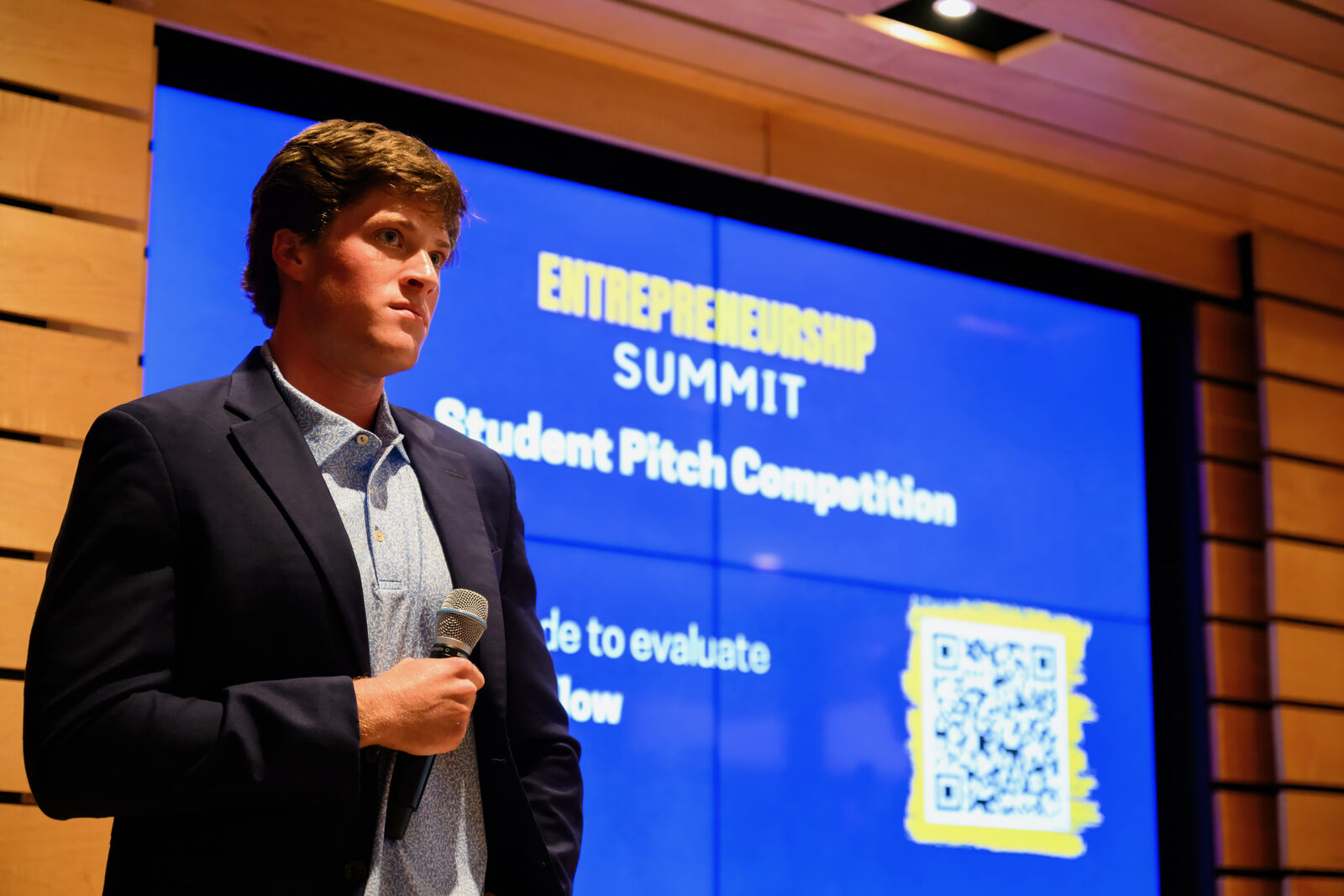
Where this ends up: Entrepreneurship Summit, April 2025.
By Wednesday, Sep 9
- Claude Code installed and signed in. Screenshot of
hello.md. - Get the two books: Mollick, Co-Intelligence; Lavingia, The Minimalist Entrepreneur. First reading is due Sep 16.
- Three inefficiencies, with evidence, in Canvas by Fri Sep 11, with Log 1. Your card is one. For each: who does it (named org), what the hands do, how often, how you know, which bucket. Details on the hunt page.
- Read the site. jaymargalus.com/foundations. Ten minutes. There will be five questions Wednesday.
First Venture Log: Friday Sep 11, 11:59pm. Includes your gift plan.
Studio norms
We'll finish these together Wednesday. Starters:
- "Listen to understand, not to respond."
- "Feedback: be kind, not nice."
- "Test, don't debate."
- "Show the agent doing the work. The work argues for itself."
Phones down and off during class. Laptops open during demos. Things will break in front of the class. That's the curriculum.
Questions.
jaymargalus.com/foundations · jmargalus@wlu.edu · Holekamp 109 · Mon + Wed 1:45–2:30