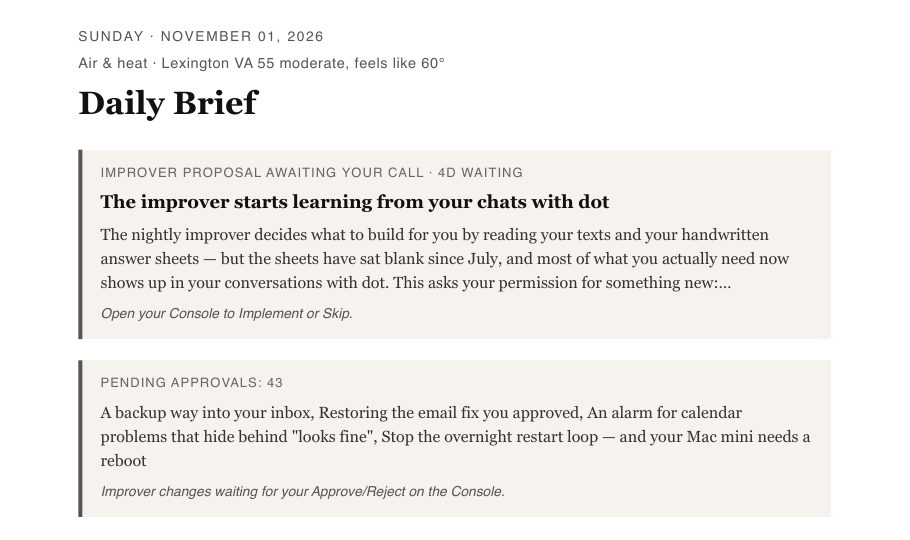
The screenshot above is the top of this morning’s brief. It was on my e-ink tablet when I woke up. At 5:45 a Mac Mini in my house pulled my calendar, my inbox, my texts, my GitHub activity, and the air quality, handed the pile to a model with instructions about what I care about, and pushed the result to the tablet as a PDF. The top item is a proposal from the overnight improver, asking permission to start reading my chats with my assistant so it can figure out what to build next. Below that, a count of changes it has made and is waiting for me to approve, and a note that the Mini needs a reboot.
I didn’t ask for any of it.
Most of what we call using a computer is still asking it things. You open the app, type the question, and read the answer. The agent I wrote about on Tuesday changes who picks the model and who builds the software, but it’s still reactive. You say what you want and it goes. The next step, and the one I’ve been living with for a few months, is the computer deciding on its own that there’s something you should know and bringing it to you.
On Mondays a second job reads every project I have notes on, checks how long since each one moved, and writes a page of what’s rotting: deadlines coming, work I said I’d do and haven’t, threads that went quiet. It remembers how long each item has been flagged, so the page says “three weeks” next to the thing I’ve been avoiding. The alert scripts text me on Telegram when something changes that they think I’d want to hear about.
The obvious objection is that this is a recipe for a computer that won’t shut up. It would be, except for one file.
It’s called ATTENTION.md and it’s about a page long. It ranks the ways the system can reach me, from most expensive to cheapest. A text message is for things that genuinely need me within the hour. The morning brief is for anything that can wait until I read it. A log on a web page is for everything else. When the system isn’t sure, the rule is to put it in the next brief.
The same file lists what it can do without asking (edit its own notes, deploy a script to the Mini, re-run a job) and what it can’t (send a message to a real person, commit code, touch anything I’ve marked as sacred). I wrote it by hand, and I edit it when the computer interrupts me about something I didn’t care about, or stays quiet about something I did.
That file is my answer to a question that’s going to come up for everyone soon: who decides what’s important? A computer acting on your behalf has to have some idea of what you want, and you can’t fully write that down. The best I’ve managed is a short policy and a feedback loop. It gets it wrong, I adjust the policy, it gets it less wrong. Nobody is optimizing anything. I wrote a list of rules and I keep rewriting it.
The honest picture includes the misses. In late September the brief ran two mornings in a degraded mode because a login had expired, and it logged the reason so I’d see it. And that count of 43 pending approvals means the system now proposes changes faster than I review them. The bottleneck moved from the computer to me.
Also, it’s been telling me the Mini needs a reboot. It’s right. I’ll get to it.